A nervous breakdown, also known as a mental breakdown, is a mental health crisis instead of a mental health diagnosis, but it can be just as terrifying. You may endure intense stress and anxiety and find it difficult to manage the physical and emotional demands of daily life if you are experiencing a mental breakdown. This mental health crisis will also render you unable to work, study, and attend to familial responsibilities and leave you feeling isolated, alone, and vulnerable.
A nervous breakdown is typically caused by extreme stress and a lack of healthy coping skills to manage them. However, the severity of the breakdown, how much it impacts your ability to function, and how long it lasts can vary, depending on the individual and its contributing factors. However, prompt treatment can help prevent the condition from worsening.
A mental breakdown is not a sudden onset of emotions. Instead, your feelings, thoughts, and actions progress through several stages.
The five stages of a mental breakdown include:
Many signs suggest that a person is experiencing a nervous breakdown. Some of these symptoms are physical, psychological, or behavioral. Depending on the underlying cause, these symptoms may differ from person to person.
Some of the symptoms of a mental breakdown include:
In some cases, the stress caused by a nervous breakdown can be severe enough to induce psychosis and cause symptoms such as paranoia, visual or auditory hallucinations, or delusions. This form of a nervous breakdown is potentially harmful and thus, may require hospitalization for stabilization and treatment.
If you’re experiencing a nervous breakdown, believe you may harm yourself, or are contemplating suicide, contact the National Suicide Prevention Lifeline or connect to the Lifeline by dialing 988. The new three-digit dialing code, 988, will direct calls to the National Suicide Prevention Lifeline. Beginning July 16, 2022, this dialing code will be available to everyone in the United States. Even after 988 is deployed nationally, the present Lifeline phone number (1-800-273-8255) will remain available to those in mental distress or suicidal crisis.
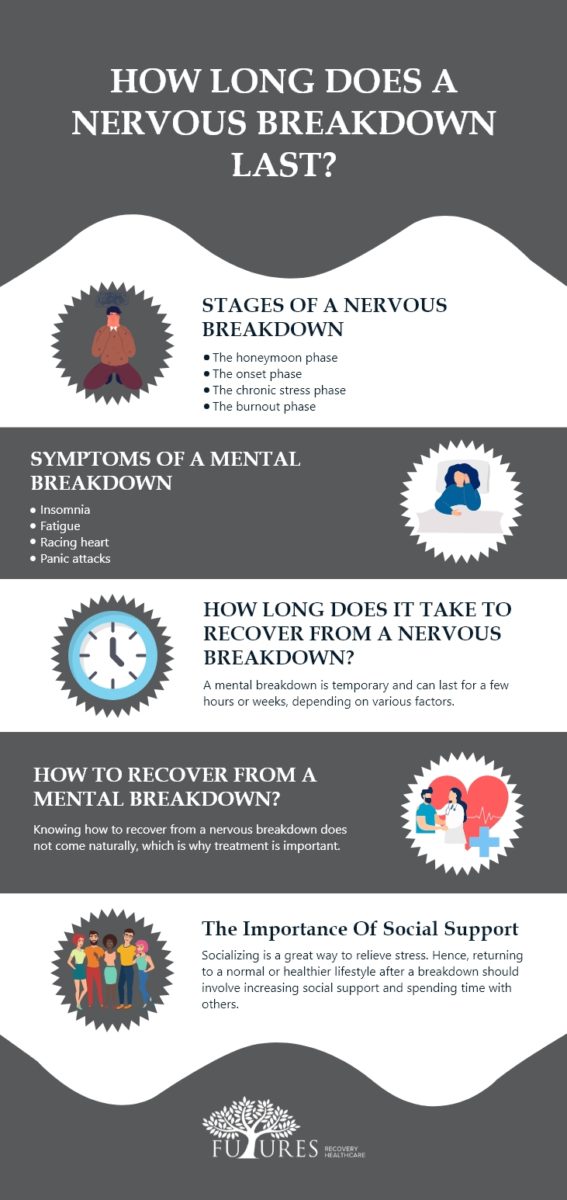
A mental breakdown is temporary and can last for a few hours or weeks, depending on various factors, including:
Regardless of how long your breakdown lasts, it is crucial to seek prompt treatment to address the condition. Suppose the cause of your breakdown is an underlying mental health disorder such as depression or anxiety. In that case, you may need lifelong treatment to manage the condition and improve your quality of life. But if the breakdown is triggered by a severe period of stress, you may not require treatment beyond the end of the stressful event, although you may benefit from long-term therapy.
Knowing how to recover from a nervous breakdown does not come naturally, which is why treatment is important. Therapists and other mental health professionals can develop a treatment plan to help you overcome and avoid future breakdowns. Your treatment plan may include various psychotherapies, group support, and medications.
In addition to seeking treatment, you can also make a few lifestyle changes, including:
Socializing is a great way to relieve stress. Simply talking to someone willing to listen can do a lot to relieve stress, even if it doesn’t offer any concrete solution to the problems causing the stress. Hence, returning to a normal or healthier lifestyle after a breakdown should involve increasing your social support and spending time with others. You can start by investing time and effort in your closest relationships. It can be easy to let these relationships slide with a busy life, but taking the time to cultivate them will benefit you.
It also helps to look for social support outside your closest circle. If work is a major source of stress in your everyday life, try cultivating friendships with your coworkers. Get involved with work events and initiatives. This will provide you with a healthy way to cope with stress on the job. You can also participate in support groups for people with similar mental health issues. According to the National Center for Biotechnology Information (NCBI), meeting up with support groups once in a while is a great way to reflect, share and support one another.
If you or someone you care about is struggling with a mental health disorder, substance use disorder, or co-occurring disorder, Futures Recovery Healthcare is here for you.
Futures Recovery Healthcare has a dedicated mental health treatment program and substance abuse treatment program that can assist you in receiving the care you need. Patients can receive comprehensive care for depressive disorders, anxiety disorders, personality disorders, bipolar disorders, and other related conditions through our multidisciplinary team approach, including clinical, psychiatric, medication, medical, and wellness interventions and support. To learn more about our mental health care services, contact us online or call 866-804-2098.

Our specialized staff stands to ready to help you through this challenging time.
Lorem ipsum dolor sit amet, consectetur adipiscing elit. Praesent tortor tellus, vulputate eu dignissim eu, auctor id justo.

Lorem ipsum dolor sit amet, consectetur adipiscing elit. Nullam placerat, sem a imperdiet gravida, neque nibh lacinia diam, vitae imperdiet ex ex id sem. Lorem ipsum dolor sit amet, consectetur adipiscing elit.
Continue Reading →
Lorem ipsum dolor sit amet, consectetur adipiscing elit. Nullam placerat, sem a imperdiet gravida, neque nibh lacinia diam, vitae imperdiet ex ex id sem. Lorem ipsum dolor sit amet, consectetur adipiscing elit.
Continue Reading →
Sit amet, consectetur adipiscing elit. Nullam placerat, sem a imperdiet gravida, neque nibh lacinia diam, vitae imperdiet ex ex id sem.
Continue Reading →



Payment Portal
Events Calendar
Verify Insurance
Download Brochure
Futures Recovery Healthcare
701 Old Dixie Hwy
Tequesta, FL 33469
Admissions: 866.351.7588
Front Desk: 561.935.5795
© 2026 Futures Recovery Healthcare. All Rights Reserved.


