What would you do if someone you know was having a mental breakdown? Do you know how to help them? There are multiple ways to assist a friend, family member, or coworker experiencing a mental breakdown. And to do that, you must know the indicators of a mental breakdown and how to aid someone experiencing it.
Let’s start by defining a mental breakdown. A mental breakdown, also known as a nervous breakdown, is a mental health crisis marked by a period of acute emotional distress that prevents an individual from functioning normally. A mental breakdown is not a medical term or a mental health diagnosis since it does not describe a specific condition. Rather, it’s a term used conversationally to describe a situation of intense physical and emotional stress that someone cannot cope with temporarily.
The cause of a mental health breakdown can differ from person to person. While not all mental breakdowns have clear triggers, a traumatic or stressful event can often trigger a breakdown. Other possible reasons for a mental breakdown include:
A mental breakdown can last a few hours or several weeks; the longer it lasts, the more detrimental it can be to a person’s health. Similarly, when stress symptoms persist over an extended length of time, they can interfere with both job and personal relationships.
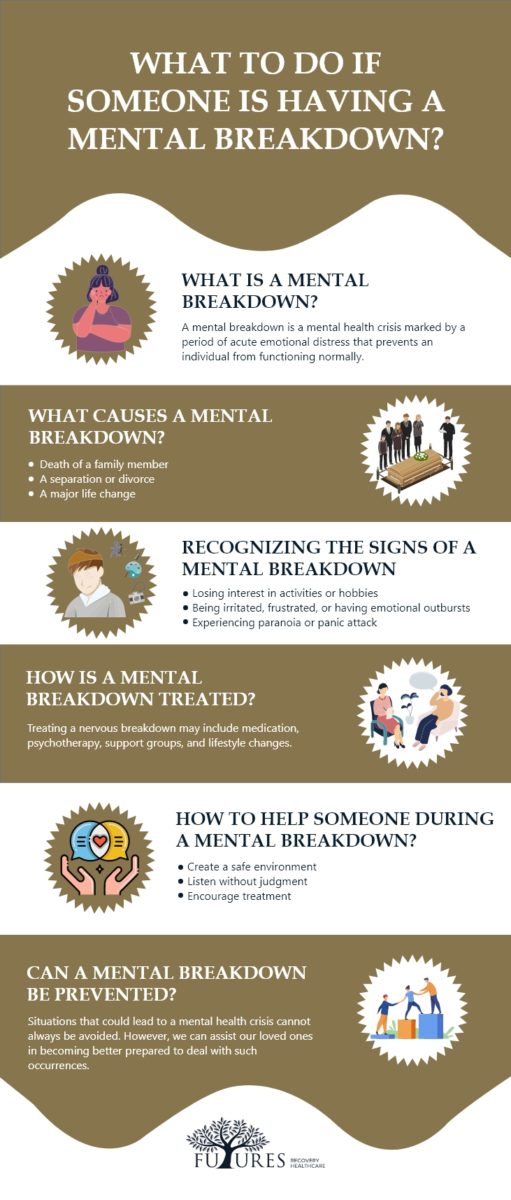
Although certain symptoms are associated with specific mental health conditions, no two people behave similarly during a nervous breakdown. And the signs and symptoms can vary depending on the underlying cause. However, there are some common signs and symptoms that indicate a nervous breakdown:
Symptoms of withdrawal:
Symptoms of depression:
Physical symptoms:
Other mental health symptoms:
These signs and symptoms are usually progressive, which means they will not go away unless they are addressed, appropriate coping strategies are adopted, and positive lifestyle changes are made.
One of the key therapeutic choices for patients suffering from psychological stress is psychotherapy (talk therapy), and cognitive-behavioral therapy (CBT) is a popular type of psychotherapy. CBT aims to change irrational thought patterns based on emotional beliefs. It’s an effective, goal-oriented, short-term treatment and straightforward approach to therapy to reduce stress and feelings of anxiety.
CBT involves the following process:
Your mental health provider may also prescribe medications to help you manage your anxiety, depression, or poor sleep habits.
In addition to psychotherapy and medications, patients can also benefit from participating in support groups and making healthy lifestyle changes. Participating in support groups or self-help groups can provide individuals undergoing a mental breakdown with numerous benefits by bringing together individuals who are experiencing or have experienced similar situations. A support group provides a safe environment where you can obtain practical, constructive advice and beneficial information. When searching for a local support group, your primary care physician, mental health professional, or local religious institution are often the best places to start. You can also search for a local meeting on the National Alliance on Mental Illness (NAMI), Substance Abuse and Mental Health Services Administration (SAMHSA), and Mental Health America (MHA) websites.
The main symptom of a mental breakdown is the inability to function normally, which may include the inability to ask for help. So when someone is experiencing a nervous breakdown, it’s important to ensure that help is available.
Following are some general strategies for helping someone through a mental breakdown:
If the person refuses to accept help, try to figure out why and make them feel better about seeking help. They may have misconceived notions about getting help or their treatment options. However, it’s important to respect their right not to seek help unless you believe they are putting themselves or others in danger.
There may be instances when a person requires immediate assistance, especially if you are concerned about their safety. If you or someone you care about is experiencing a nervous breakdown, believes they may harm themselves, or are contemplating suicide, contact the National Suicide Prevention Lifeline or connect to the Lifeline by dialing 988. The new three-digit dialing code, 988, will direct calls to the National Suicide Prevention Lifeline. Beginning July 16, 2022, this dialing code will be available to everyone in the United States. Even after 988 is deployed nationally, the present Lifeline phone number (1-800-273-8255) will remain available to those in mental distress or suicidal crisis. Talking can be highly therapeutic to someone who is suicidal. This service connects people to the nearest Lifeline crisis center in their area and provides crisis counseling and referrals to mental health services.
If someone tells you they are suicidal, it’s important to encourage them to seek help from friends, family, or mental health services, but it’s also critical for you to seek counseling after such a traumatic experience.
Situations that could lead to a mental health crisis cannot always be avoided. However, we can assist our loved ones in becoming better prepared to deal with such occurrences. Many of the most effective self-help tips entail lifestyle adjustments. Although these strategies may not completely eliminate episodes of unmanageable stress, anxiety, or depression, they may minimize their intensity and frequency.
People who have overcome a mental breakdown often state that it forced them to confront their problems, seek help, and build stronger coping mechanisms. It also meant individuals could be diagnosed with untreated mental illness and receive treatment. People who have received treatment and therapy following a mental breakdown are typically more resilient and able to manage daily life much better.
The Mental Health Program at Futures Recovery Healthcare works tirelessly to assist individuals and families in obtaining treatment and support for various mental health disorders in a judgment-free environment.
We treat depressive disorders, anxiety disorders, personality disorders, bipolar disorder, and other related conditions using clinical, psychiatric, medication, medical, and wellness interventions and support. To learn more about our mental health care services, contact us online or call 866-804-2098.

Our specialized staff stands to ready to help you through this challenging time.
Lorem ipsum dolor sit amet, consectetur adipiscing elit. Praesent tortor tellus, vulputate eu dignissim eu, auctor id justo.

Lorem ipsum dolor sit amet, consectetur adipiscing elit. Nullam placerat, sem a imperdiet gravida, neque nibh lacinia diam, vitae imperdiet ex ex id sem. Lorem ipsum dolor sit amet, consectetur adipiscing elit.
Continue Reading →
Lorem ipsum dolor sit amet, consectetur adipiscing elit. Nullam placerat, sem a imperdiet gravida, neque nibh lacinia diam, vitae imperdiet ex ex id sem. Lorem ipsum dolor sit amet, consectetur adipiscing elit.
Continue Reading →
Sit amet, consectetur adipiscing elit. Nullam placerat, sem a imperdiet gravida, neque nibh lacinia diam, vitae imperdiet ex ex id sem.
Continue Reading →



Payment Portal
Events Calendar
Verify Insurance
Download Brochure
Futures Recovery Healthcare
701 Old Dixie Hwy
Tequesta, FL 33469
Admissions: 866.351.7588
Front Desk: 561.935.5795
© 2026 Futures Recovery Healthcare. All Rights Reserved.


