The intersection of cannabis and synthetic opioids marks a critical point of discussion in contemporary substance use, particularly with the emergence of fentanyl-laced weed. Fentanyl, a potent synthetic opioid, is approximately 50 to 100 times more potent than morphine and heroin. When unknowingly combined with cannabis, it poses severe health risks due to its high potential for overdose and fatal consequences. This article aims to shed light on the phenomenon of fentanyl-laced weed and elucidate the inherent dangers, the scope of the problem, the implications for public health and safety, and the available preventive measures and treatment options. The objective is to inform readers about the multifaceted impacts of this adulterated substance, fostering awareness and understanding in the face of this escalating public health issue.
Fentanyl-laced weed refers to cannabis or marijuana contaminated with fentanyl, a synthetic opioid that is extremely potent and potentially lethal even in small amounts. Fentanyl is medically used to treat severe pain, but its illicit production and distribution have led to a rise in opioid-related overdoses and deaths.
Weed, also known as cannabis or marijuana, is a plant-based substance used recreationally and medicinally for its psychoactive effects, typically associated with relaxation and altered perception. While cannabis is legal for medical or recreational use in many places, its combination with fentanyl poses severe and life-threatening risks.
The contamination of cannabis with fentanyl is particularly alarming as it merges the risks associated with opioids, such as respiratory depression and overdose, with a widely used substance perceived as relatively low-risk. Individuals consuming fentanyl-laced marijuana may be unaware of its presence and, therefore, unprepared for the potent and hazardous effects of fentanyl.
Fentanyl-laced weed has manifested as a substantial and alarming public health concern. Fentanyl’s presence in cannabis is particularly unsettling due to its extreme potency and the risk it poses for unintentional overdoses. Given the clandestine nature of illicit drug manufacturing and distribution, the exact prevalence of fentanyl-laced weed is challenging to ascertain. However, numerous reports and cases have highlighted the growing presence of this adulterated substance in various regions.
Authorities and health officials have reported incidents involving fentanyl-laced weed in several areas, signaling a rising trend in the contamination of cannabis. These occurrences underscore the increased risk to individuals who may unknowingly consume cannabis tainted with fentanyl, exposing them to its life-threatening effects.
In addressing the extent of the problem, it’s crucial to consider both the immediate and long-term implications for individual and public health. The inadvertent consumption of fentanyl can lead to respiratory depression, overdose, and, in severe cases, death. Introducing fentanyl into the cannabis supply inadvertently exposes a broader demographic to the risks associated with opioid use, escalating the burden on healthcare systems and emergency services.
By understanding the extent and repercussions of fentanyl-laced weed, communities, health professionals, and law enforcement can collaboratively work towards addressing and curbing this growing public health concern, striving to protect individuals from the unintended and potentially fatal consequences of consuming contaminated cannabis.
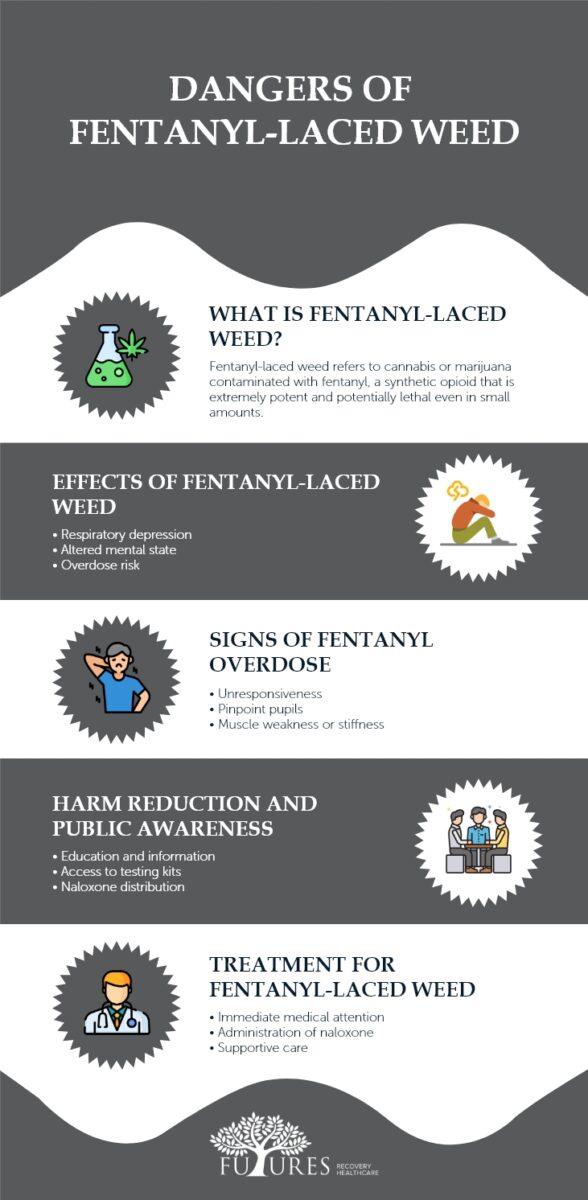
The consumption of fentanyl-laced weed can induce a series of severe and potentially fatal effects due to the powerful opioid properties of fentanyl combined with the psychoactive characteristics of cannabis.
It’s vital for individuals to be well-informed and vigilant and to employ harm reduction strategies to protect themselves and their communities from the severe and multifaceted impacts of this hazardous combination.
Recognizing the signs of a fentanyl overdose promptly is crucial for ensuring the timely intervention that can potentially save lives. Here are the key symptoms to be aware of:
Recognizing these signs and responding promptly by calling emergency services and administering naloxone, if available, can be life-saving.
The incursion of fentanyl into the cannabis supply chain has broad and severe implications for public health and safety. A critical worry is the elevated risk of overdose and fatal consequences for individuals consuming cannabis, potentially laced with fentanyl, unknowingly. Accidentally ingesting even trace amounts of fentanyl can prove lethal, especially for those without an opioid tolerance, amplifying the urgency to confront this public health emergency.
The rise in cases of fentanyl-related overdoses strains emergency medical services and healthcare systems. The necessity for rapid response and administration of opioid reversal agents like naloxone has become more imperative, requiring additional resources, training, and preparedness from medical personnel and first responders. The consequential burden on healthcare infrastructures underlines the need for preemptive measures and interventions to counteract the influx of fentanyl-laced substances.
Beyond the immediate health risks, the presence of fentanyl in cannabis can foster fear and mistrust among individuals who consume cannabis, potentially deterring them from seeking help in the event of exposure or overdose. This reluctance can further complicate efforts to provide timely and effective care to those in need.
In tandem with healthcare implications, law enforcement agencies face challenges in tracing and combating the illicit production and distribution of fentanyl. The introduction of fentanyl into various illicit substances necessitates enhanced vigilance and collaboration between different agencies and communities to mitigate its dissemination and impact.
Addressing the challenges of fentanyl-laced weed necessitates a robust approach focusing on harm reduction and public awareness. Here’s how these strategies can play a crucial role in mitigating the risks associated with fentanyl-contaminated cannabis:
By implementing and promoting harm reduction and public awareness strategies, communities can work together to safeguard against the dangers of fentanyl-laced weed, fostering a culture of knowledge, caution, and support that is essential in mitigating the adverse effects and enhancing public safety.
Fentanyl-laced weed’s emergence poses complex legal challenges and underscores the need for coherent legal frameworks to address this public health issue. Here are the pertinent legal perspectives related to this matter:
Addressing the legal perspectives involved in the emergence of fentanyl-laced weed is essential in creating a responsive, supportive environment conducive to public safety and well-being. Balancing legal considerations with public health priorities will be pivotal in developing sustainable solutions to the multifaceted challenges presented by this public health concern.
Addressing exposure to fentanyl-laced cannabis involves immediate and ongoing interventions to manage the acute risks and support the individual’s recovery. Here is a structured approach to treating exposure to fentanyl-contaminated weed:
Effective treatment is often a long-term endeavor that requires ongoing commitment and support. It should be tailored to suit the individual’s needs and adjusted throughout the recovery journey. Seeking assistance from healthcare professionals and addiction specialists is indispensable for a secure and successful recovery from fentanyl use and addiction.
At Futures Recovery Healthcare, we are dedicated to helping individuals break free from the grips of addiction and embark on a journey toward lasting recovery. Our comprehensive addiction treatment programs are designed to address the unique needs of each individual and provide a supportive and compassionate environment for healing. With a team of experienced medical professionals, therapists, and counselors, we offer evidence-based treatments and a range of holistic approaches to support your recovery. Contact us to learn more about our addiction treatment options and start your journey towards a healthier, happier life.

Our specialized staff stands to ready to help you through this challenging time.
Lorem ipsum dolor sit amet, consectetur adipiscing elit. Praesent tortor tellus, vulputate eu dignissim eu, auctor id justo.

Lorem ipsum dolor sit amet, consectetur adipiscing elit. Nullam placerat, sem a imperdiet gravida, neque nibh lacinia diam, vitae imperdiet ex ex id sem. Lorem ipsum dolor sit amet, consectetur adipiscing elit.
Continue Reading →
Lorem ipsum dolor sit amet, consectetur adipiscing elit. Nullam placerat, sem a imperdiet gravida, neque nibh lacinia diam, vitae imperdiet ex ex id sem. Lorem ipsum dolor sit amet, consectetur adipiscing elit.
Continue Reading →
Sit amet, consectetur adipiscing elit. Nullam placerat, sem a imperdiet gravida, neque nibh lacinia diam, vitae imperdiet ex ex id sem.
Continue Reading →



Payment Portal
Events Calendar
Verify Insurance
Download Brochure
Futures Recovery Healthcare
701 Old Dixie Hwy
Tequesta, FL 33469
Admissions: 866.351.7588
Front Desk: 561.935.5795
© 2026 Futures Recovery Healthcare. All Rights Reserved.


