Because of their similarities, people sometimes confuse nervous breakdowns with panic attacks. Nonetheless, these are two separate mental health crises with symptoms that overlap. Recognizing various symptoms can help differentiate between the two and help you get the care you need. This article will examine the definitions, signs and symptoms, and treatment options for the two conditions.
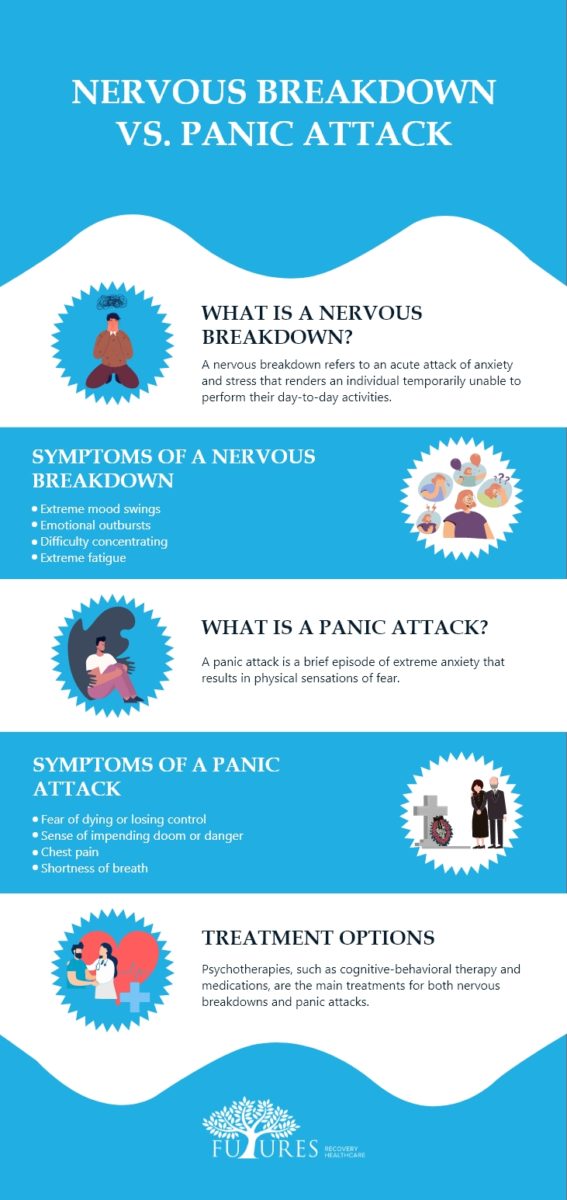
Although the term “nervous breakdown” is not a clinically recognized condition or diagnosis, it has become a colloquial phrase used to describe a situation of overwhelming stress that causes you to experience a wide range of mental health symptoms. A nervous breakdown, also known as a mental breakdown, refers to an acute attack of anxiety and stress that renders an individual temporarily unable to perform their day-to-day activities. People with a history of anxiety disorders and those that experience sudden negative life events without adequate coping mechanisms are at a high risk of developing the condition.
The signs and symptoms of a mental breakdown vary from person to person, based on the underlying cause. Nevertheless, they generally consist of psychological, behavioral, and physical symptoms, including:
If you’re experiencing a nervous breakdown, believe you may harm yourself, or are contemplating suicide, contact the National Suicide Prevention Lifeline or connect to the Lifeline by dialing 988. The new three-digit dialing code, 988, will direct calls to the National Suicide Prevention Lifeline. Beginning July 16, 2022, this dialing code will be available to everyone in the United States. Even after 988 is deployed nationally, the present Lifeline phone number (1-800-273-8255) will remain available to those in mental distress or suicidal crisis.
In certain instances, a nervous breakdown may indicate an undiagnosed physical or mental health condition. If symptoms persist over a few weeks, you should consult a medical expert for an accurate diagnosis.
A nervous breakdown may last for a few hours or weeks, depending on various factors, including:
It’s crucial to consult a mental health professional to help address your mental health crisis. Appropriate, timely treatment can help minimize the severity and duration of a breakdown.
A panic attack is a brief episode of extreme anxiety that results in physical sensations of fear. The Diagnostic and Statistical Manual of Mental Disorders (DSM-5) recognizes and classifies panic attacks as unexpected or expected. Unexpected panic attacks occur without reason, and expected attacks can be triggered by:
Although panic attacks are not life-threatening, they can be frightening and severely impact your quality of life.
Many people experience panic attacks only on rare occasions, such as times of stress or illness. A person with panic disorder, which is a kind of anxiety disorder, experiences recurring panic attacks. They usually suffer periodic and unexpected panic attacks and persistent fear of further attacks. Panic disorders often start in the late teens or early adulthood and affect more women than men. According to the National Institute of Mental Health (NIMH), an estimated 4.7% of American adults experience panic disorder at some point in their lives.
While panic attacks and mental breakdowns share many emotional and physical symptoms, they are two different conditions that can occur independently or concurrently. Panic attacks typically include a combination of psychological and physical symptoms, such as:
There are numerous varieties of panic attacks, but symptoms often peak within minutes. After a panic attack subsides, you may feel exhausted and weary.
Depending on the individual, panic attacks appear suddenly, peak after a few minutes, and subside within 10 to 20 minutes. Multiple panic attacks that occur in waves for at least an hour are also possible. Although physical symptoms are the first to subside, depending on the severity of your anxiety, you may continue to experience shortness of breath and chest and stomach pains for longer. The most persistent symptoms are typically behavioral or cognitive. Following the incident, generalized anxiety may persist. After the attack’s end, you may also experience fatigue and muscle strain.
Psychotherapies, such as cognitive-behavioral therapy and medications, are the main treatments for both nervous breakdowns and panic attacks. Your therapist will monitor your symptoms, discuss your medical history, and conduct a physical exam to rule out other underlying medical conditions or mental health disorders that could be causing the symptoms. They will then create a treatment plan that is tailored to your condition.
In addition to receiving care for your condition, you can also follow the below strategies and lifestyle changes to prevent future mental breakdowns or panic attacks:
Participating in support or self-help groups can also provide individuals undergoing a mental breakdown or panic attack with numerous benefits by bringing together individuals who are experiencing or have experienced similar situations. A support group provides a safe environment where you can obtain practical, constructive advice and beneficial information. When searching for a local support group, your primary care physician, mental health professional, or local religious institution are often the best places to start. You can also search for a local meeting on the National Alliance on Mental Illness (NAMI), Substance Abuse and Mental Health Services Administration (SAMHSA), and Mental Health America (MHA) websites.
Although nervous breakdowns and panic attacks are two different mental health challenges, both need prompt treatment to prevent the condition from worsening.
If you or someone you care about is struggling with a mental health disorder, substance use disorder, or co-occurring disorder, Futures Recovery Healthcare is here for you. Futures Recovery Healthcare has a dedicated mental health treatment program and substance abuse treatment program that can assist you in receiving the care you need. Patients can receive comprehensive care for depressive disorders, anxiety disorders, personality disorders, bipolar disorders, and other related conditions through our multidisciplinary team approach, including clinical, psychiatric, medication, medical, and wellness interventions and support. To learn more about our mental health care services, contact us online or call 866-804-2098.

Our specialized staff stands to ready to help you through this challenging time.
Lorem ipsum dolor sit amet, consectetur adipiscing elit. Praesent tortor tellus, vulputate eu dignissim eu, auctor id justo.

Lorem ipsum dolor sit amet, consectetur adipiscing elit. Nullam placerat, sem a imperdiet gravida, neque nibh lacinia diam, vitae imperdiet ex ex id sem. Lorem ipsum dolor sit amet, consectetur adipiscing elit.
Continue Reading →
Lorem ipsum dolor sit amet, consectetur adipiscing elit. Nullam placerat, sem a imperdiet gravida, neque nibh lacinia diam, vitae imperdiet ex ex id sem. Lorem ipsum dolor sit amet, consectetur adipiscing elit.
Continue Reading →
Sit amet, consectetur adipiscing elit. Nullam placerat, sem a imperdiet gravida, neque nibh lacinia diam, vitae imperdiet ex ex id sem.
Continue Reading →



Payment Portal
Events Calendar
Verify Insurance
Download Brochure
Futures Recovery Healthcare
701 Old Dixie Hwy
Tequesta, FL 33469
Admissions: 866.351.7588
Front Desk: 561.935.5795
© 2026 Futures Recovery Healthcare. All Rights Reserved.


